
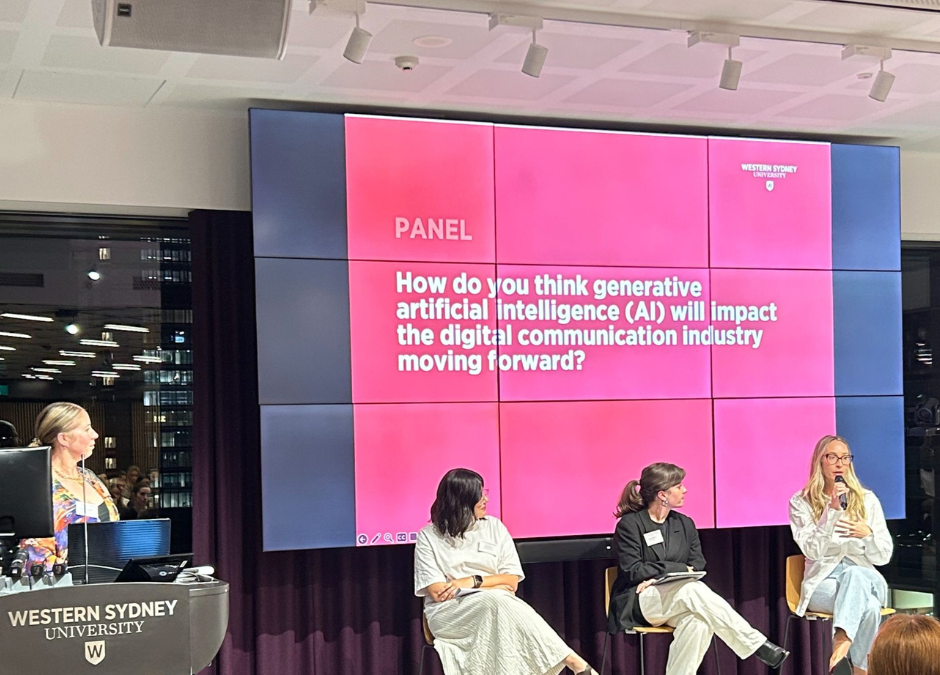
This month, I joined a panel at Western Sydney University’s PR@Western event, speaking with third-year communications students about AI, social media and what it all means for the future of the industry. These students are about to embark on careers in communications and were full of really bright, considered questions. Opportunities like this are a great way to give back and share real world insights on what it’s like to work in comms once you step out of the comfort of university life.
Here are some of the highlights from the session:
Authenticity is outperforming polish
Brands are continuing to shift toward authentic, short-form video, moving away from polished, long-form content as audiences increasingly want to see real people doing real things.
The brands cutting through are showing the humans behind the business, which we all love to see. They’re capturing everyday moments, leaning into the mundane and giving audiences a genuine look at how things actually work.
They’re also responding in real time to trends or cultural moments and owning mistakes publicly. That level of transparency builds far more trust than trying to present a perfectly curated version of the brand.
You can’t campaign your way into search
Social media channels are now being used as a search engines, with more and more people going to their TikTok or Instagram to actively look for answers, not just doom scrolling.
That means consistency beats campaigns and brands need a sustained body of content that answers real questions and proves value over time, rather than one off brand moments. We also talked about the rising use of Reddit for brands and meeting their audiences in the active discussion, responding directly to questions in threads.
AI is a tool, not the answer
The real value of AI comes from how you use it.
AI is already embedded in most workflows, from notetaking, to drafting and design, we all know it’s a powerful way to move faster – but it has its limits. AI-generated content often lacks opinion, edge and lived experience, which is why audiences are starting to feel fatigued by generic AI content.
What value does AI hold for future communicators?
For students entering the workforce, it’s an opportunity. Those who know how to prompt effectively, refine outputs and apply AI in their day to day, will stand out quickly.
AI should be used to get to a starting point faster; to brainstorm and test ideas, structure thinking and remove those time-consuming admin tasks we all hate BUT it shouldn’t do the thinking for us. That’s where strong thinking, storytelling and audience insight still make the difference.
Alex Williams